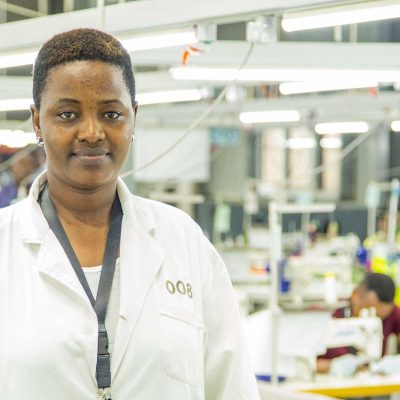
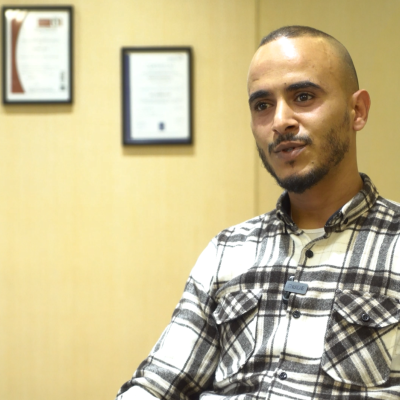
Ethiopia’s fast-growing economy driven by industrialisation and agribusiness expansion presents both opportunities and challenges. While sectors such as horticulture, agricultural processing, and manufacturing continue to create jobs, the rise in production has led to increased waste generation, inefficient resource use, and mounting pressure on natural ecosystems. Companies also face high production costs, limited access to sustainable technologies, and a shortage of skills for implementing environmentally friendly business models.
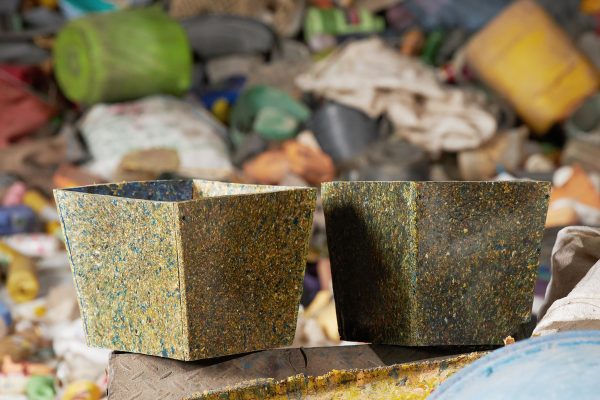 © GIZ - Byproduct of the recycled plastic
At the same time, the country has strong potential for circular economy solutions. Agricultural by-products, plastic waste, and industrial residues can be turned into value-added products, unlocking new economic opportunities. Small and medium-sized enterprises (SMEs), innovation-driven startups and SME cluster sites stand to benefit significantly from green business practices that create jobs while reducing environmental impact.
To address these challenges, Invest for Jobs supports private companies in adopting circular economy models. The programme works on the entire value chain, from modernising recycling collection through innovative IT solutions, strengthening usage of agricultural and plastic waste in production, to developing innovative new products such as production of paper out of banana waste, or animal feed out of avocado waste. Through these partnerships, the groundwork for a greener and more competitive Ethiopian economy is being laid.
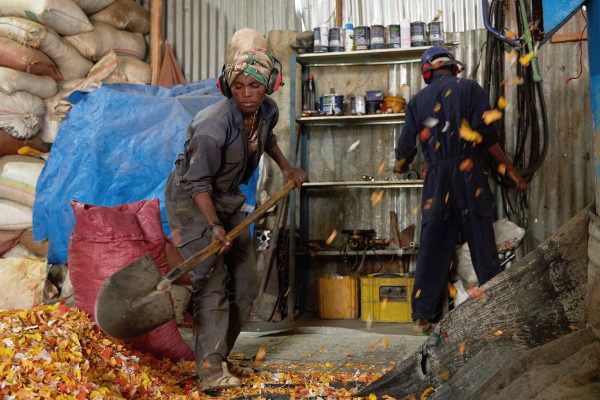 © GIZ - Working on the plastic crushing station