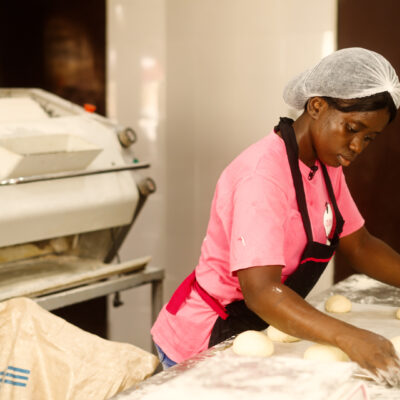
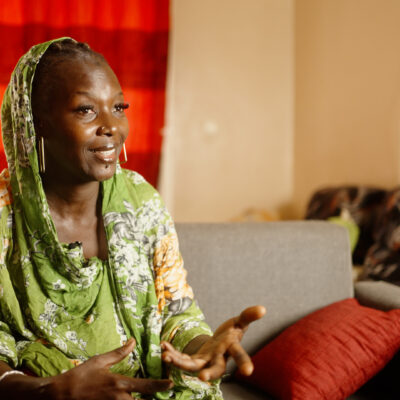
The founding of the new women’s association SHEPAG (Women Processors Association of Ghana) in the first year of the project has been an effective impulse. In response to the low proportion of women in agricultural value creation, SHEPAG positions itself as a quality service provider for female entrepreneurs in the processing sector. The current focus is on products such as frozen foods made from cassava and yams.
Another milestone is the digitalisation of processes within the associations. In collaboration with Accra Technical University and the AFOS Foundation’s PartnerAfrica project, digital solutions for recording production data have been developed. These systems are intended to make processes more efficient in the future and enable better traceability of supply chains – key requirements for exporting to European markets, especially in the context of European supply chain legislation.
At the same time, the production of biochar-based biofertiliser has been initiated. A biochar production plant manufactured in Germany was commissioned in Ghana in 2024. Initial tests with different types of biomass show that biochar improves soil quality, increases crop yields and reduces the use of chemical fertilisers, thereby contributing to CO2 reduction in agricultural production.
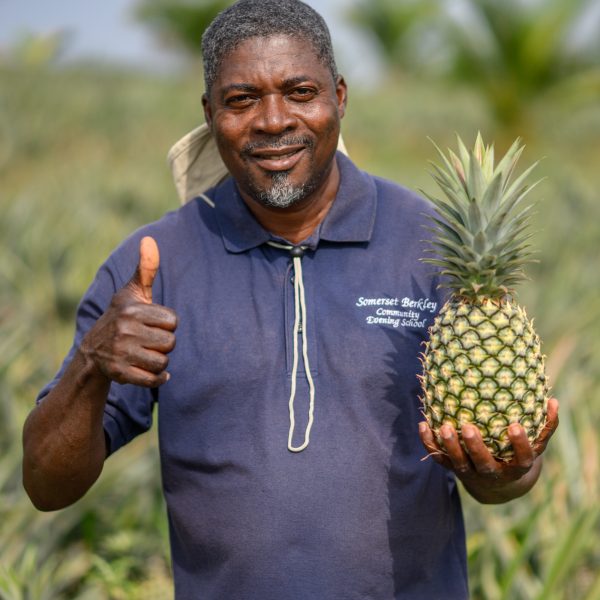 Ananas type Smooth Cayenne. © BGA
Another innovative measure is the establishment of childcare facilities on farms to enable female agricultural workers to engage in regular employment. After existing buildings were deemed unusable, it was decided to build new nurseries on two pilot farms. The approval process was successfully completed in 2024. Construction of the nurseries will begin in February 2026 and is expected to be completed by summer 2026. Ghanaian farms are expected to contribute 40 percent of the construction costs.
The project has shown so far that the combination of practical training, digitalisation, targeted support for women and innovative resource management such as biofertilisers not only strengthens exportability but also social resilience in rural areas.
The partnership project is funded by sequa gGmbH as part of the German Federal Ministry for Economic Cooperation and Development's (BMZ) special initiative ‘Decent Work for a Just Transition’.