What does your company stand for? What is your vision?
Skin Gourmet is a Ghanaian company, founded in 2014. We are specialised in raw, handmade skincare products that are so pure that you can literally eat them. Our main objective is to boost economic growth in Ghana by creating decent jobs, and we found a way to do this by turning Ghana’s natural resources into high-end finished goods. We make edible butter, edible scrubs and edible oils, among many more products. We use beauty as a force for equity, ensuring that local producers are thriving and that communities are empowered. We are using beauty as a way of benefiting both the climate and people, as well as making profit.
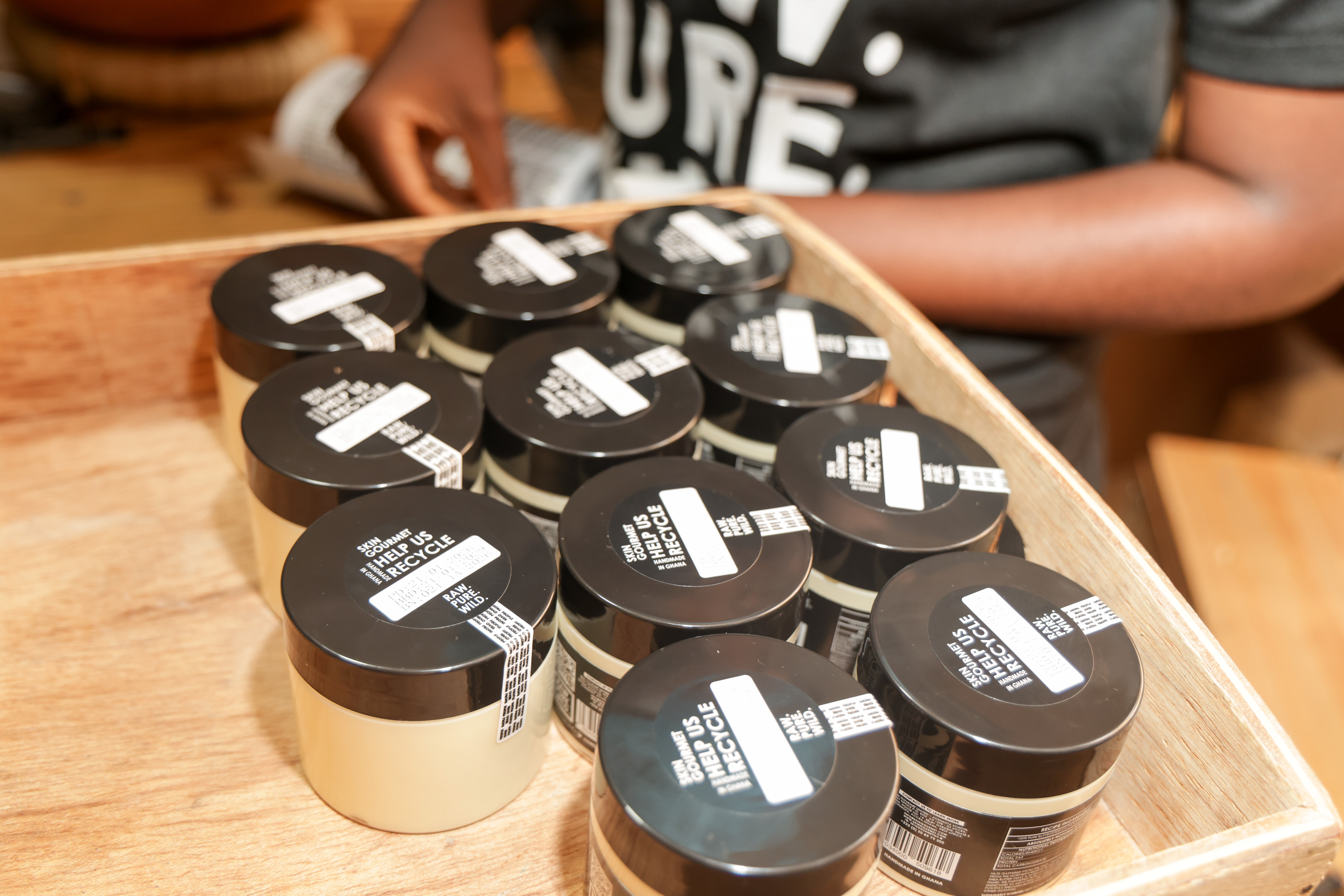 Recycling of empty packages is a key aspect of Skin Gourmet’s sustainability strategy © GIZ/ Sylvester Anokye
How did your company evolve over the last years and where does it stand today?
During Covid, we reduced the team to 11. Currently we are 27 team members, and we are aiming to hire another 20 staff members. But we do not want to grow too rapidly. We set ourselves high standards to improve the culture within the company: We founded a management team and promoted co-creation to better tackle difficulties in the company. We have also raised salaries regularly, introduced maternity and paternity leave, most Fridays are days off. To give structure to the company’s social and environmental work, we created the Skin Gourmet Foundation. It focuses on community development, sustainability, farmer support, women’s empowerment, and household well-being.
One key activity is training farmers and producers in organic and climate-smart agriculture, so they can improve quality, meet certification standards, and access better markets. Another activity is the Sustainable Energy Initiative, which aims to provide clean cookstoves to families to improve household health and reduce environmental harm.
Another current project is the construction of a factory in Northern Ghana, together with the local community. We have already started paying a 100 percent premium on the processing fee to female producers, and we want to systematise this approach. We cannot ask Europe to pay better prices, it starts with us, as the suppliers.
Where do you sell your products?
Besides the Ghanaian market, we currently export to around 30 different countries, such as Canada, Japan, US, Lebanon, India, UK, but we talk about relatively small orders. We also export to some African countries, mostly directly to customers. By studying the European market, we realised that it is a great fit for us, because of the importance of sustainability there. This is why we target this market much more intentionally.
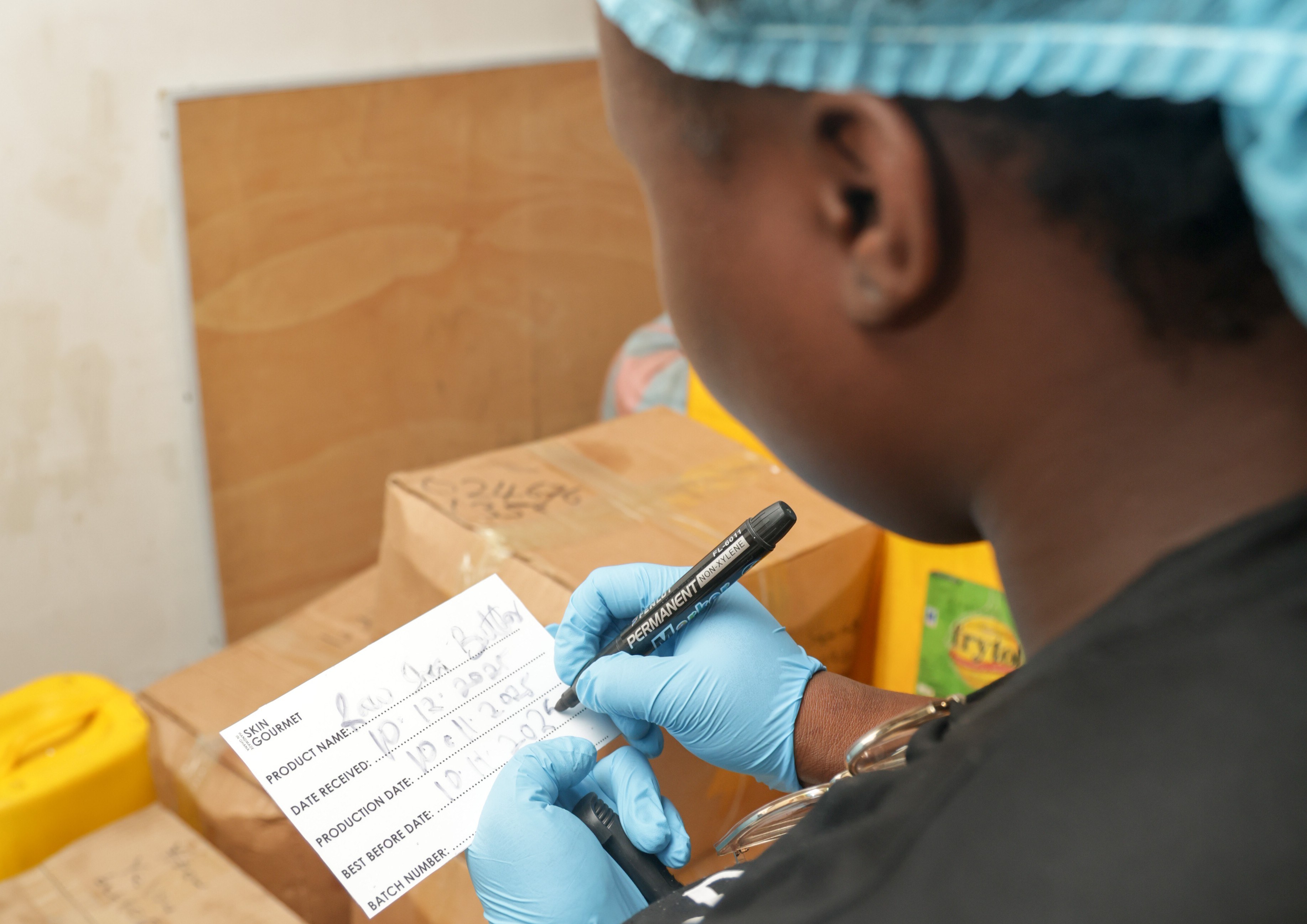 Recording incoming raw materials and finished products © GIZ/ Sylvester Anokye
What was the impact of your collaboration with Invest for Jobs?
Before collaborating with Invest for Jobs, we faced the same challenge as many companies in the region: We wanted to do business, but we did not fully understand the markets. Our participation in an exchange programme for which we embarked on a 2-weeks business trip to Hamburg and Berlin was a real eye opener. It helped us better understand the European landscape and its expectations. When it comes to the importance of sustainability for accessing the European market, even with my background having a master’s in sustainability, I did not realise how essential it is before coming to Europe. We learned that it is not enough to implement a few isolated sustainability measures, but to embed it into our entire business model.
In addition, thanks to receiving two oil extractors through the Grant Scheme for Job Creation [a cooperation between Invest for Jobs and Association of Ghana Industries], the consistency and quality of our oil has improved significantly.
We also understood that if we want to sell finished products to the European market, quality alone is not enough – trust is equally important. Certifications play a key role in building that trust, as they provide proof that our products meet international standards. And it was again Invest for Jobs orientating us which certificates to target and how to receive them.
Thanks to the different capacity building measures, we are now able to assess where we stand and where we are going. It does not provide all the answers, but it gives us a clear direction and the tools we need to move forward step by step.
Could you elaborate a bit more on the topic of quality management and certifications?
It was thanks to our collaboration with Invest for Jobs that we understood the importance of quality management. During the process, we created new roles in the company, for example a Director of Documentation. We also hired a Director of Quality Assurance. We are happy that we got HACCP-certified last year. However, when we came in touch with European buyers at the trade fair InCosmetics in Amsterdam, we understood that food safety is only the first step. This is why we currently work on the EU-organic certification, which is required by most European buyers. The challenge in implementing and especially maintaining a quality management system is the workforce, and that’s why we constantly develop the skills of our staff.
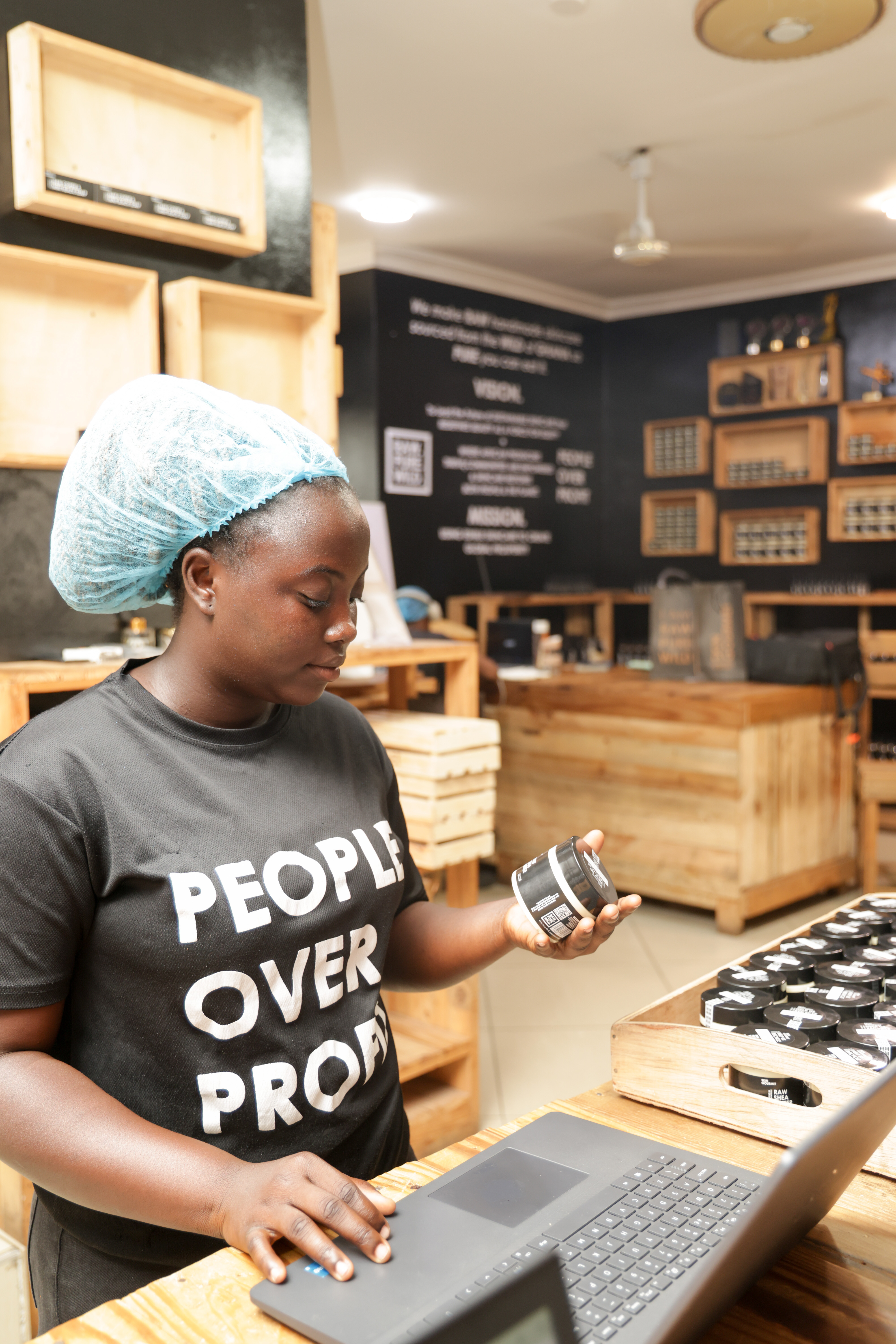 Skin Gourmets’ branding is highly influenced by its commitment to sustainability © GIZ/ Sylvester Anokye
What are your goals for the current year?
The most important step is getting to know and maintaining contact with potential international buyers. We are in contact with a potential, very responsible client in Europe; a deal with them would be a huge success for Skin Gourmet! The EU-organic certification is crucial for this, and this is why we currently put all our efforts into this. The challenge is also to integrate sustainability and quality management vertically in our supply chain. Suppliers are mostly in rural areas where we are not always present. It is crucial that the members of the cooperatives we work with understand that they are also benefiting from improved quality and new markets.
Do you have any advice for other companies?
Our advice to other companies is to grow with purpose and strong systems. Do not focus only on profit, but also on people, quality, sustainability, and community impact. International markets require trust, so companies must invest in good documentation, certifications, and consistent quality. Most importantly, carry your suppliers and team along, because sustainable growth is only possible when everyone benefits.
Skin Gourmet is supported by the Deutsche Gesellschaft für Internationale Zusammenarbeit (GIZ) GmbH within the framework of the Special Initiative "Decent Work for a Just Transition" of the German Federal Ministry for Economic Cooperation and Development (BMZ).